 Roomit
U.S. Rent by the Room: Stay Under 30% and Find Compatible Housemates
Start your search on specialized room-listing platforms and local marketplaces, not general apartment sites, since that’s where most single-room inventory actually lives. Budget with the 30% rule and always fold in utilities before you commit. Above all, screen for compatibility, not just price, and don’t move a single box in until you have a written agreement signed and guidance for managing tenants.
TL;DR:
- Moving costs, including deposits and application fees, can range from a few hundred to several thousand dollars upfront, depending on the city and landlord requirements.
- Neighborhood safety, commute time at peak hours, and proximity to amenities significantly impact the overall living experience and should be carefully checked before choosing a location.
- Red flags such as demanding deposits before in-person viewing and inconsistent listing details indicate potential scams, warranting caution or avoidance.
- Prioritizing compatibility questions about cleaning habits, guest policies, and routines can prevent conflicts and ensure a smoother shared-living experience.
Table of Contents
- How to Rent by the Room Without Blowing Your Budget
- Where to Search and How to Spot a Bad Listing
- What to Ask and Check at the Viewing
- Leases, Deposits, and How to Pay Safely
- Safety and Tenant-Rights Basics Worth Knowing
- Why Compatibility Should Drive Your Room Choice
- Handling Disputes and Knowing When to Walk Away
- An Honest Take on What Actually Makes a Room Rental Work
- Roomit: Matching You by Habits, Not Just Rent
- Key Resources for Renters
- Sources
- FAQ
How to Rent by the Room Without Blowing Your Budget
The math behind room rentals is simple, but skipping it is how people end up broke by the 15th. A well-known budgeting benchmark says your rent, including your share of utilities, shouldn’t exceed 30% of your gross monthly income, a rule Rentser recommends as the starting point for anyone pricing out a room. If you earn $3,500 a month before taxes, that puts your ceiling around $1,050, and that number needs to cover more than just the rent line.
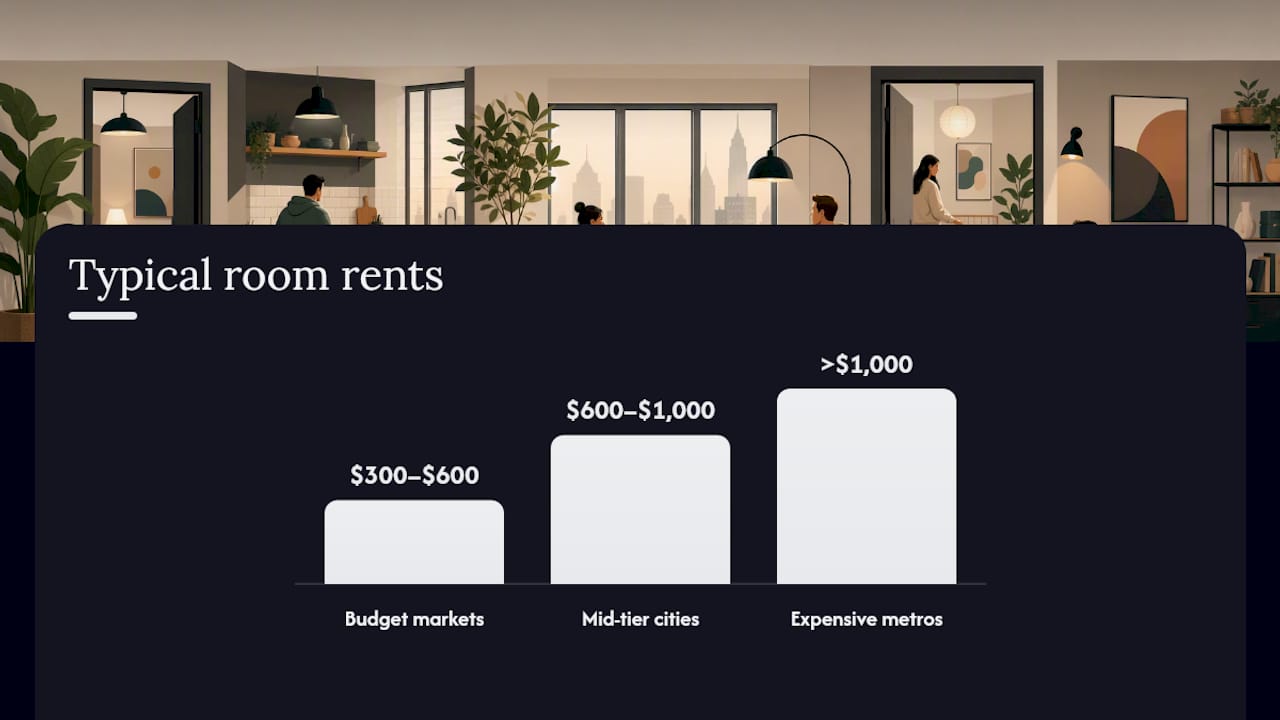
Utilities rarely show up in the advertised price, and that’s where budgets quietly break. Add internet (often $20 to $40 per person in a shared house), electricity and gas (another $50 to $100 depending on season and climate), and any shared streaming or cleaning supplies. Renting a room typically costs 30% to 60% less than a comparable one-bedroom apartment, with budget markets running $300 to $600, mid-tier cities landing between $600 and $1,000, and expensive metros pushing past $1,000.
Move-in costs stack up fast too. Expect first month’s rent, a security deposit (often equal to one month), and sometimes a small screening or application fee. Budget a few hundred to a few thousand dollars upfront in most mid-sized cities before you get your keys.
Neighborhood choice matters as much as the number on the listing. Before you fall for a great price, check these:
- Commute time to work or school at rush hour, not the optimistic Google Maps estimate
- Grocery stores, transit stops, and gyms within walking distance
- Whether the neighborhood tends to attract renters with a similar lifestyle to yours
- Basic safety data for the specific block, not just the zip code
Pro Tip: Map your commute at the actual time you’d be traveling. A 20-minute drive on paper can turn into 50 minutes during rush hour, and that gap adds up to real money in gas or transit passes.
Where to Search and How to Spot a Bad Listing
No single platform has everything, so combining a few sources gives you far better coverage than sticking to one. Specialized room-rental sites focus specifically on shared housing and tend to have more detail on house rules and current housemates. Mainstream marketplaces cast a wider net but bury room listings among full apartments. Local neighborhood groups and community boards often surface rooms that never make it to a paid listing site at all. Mixing all three is the most reliable way to find both volume and price variety.
Set up saved searches and alerts so new listings hit your inbox the moment they post. Rooms in popular buildings or neighborhoods can get five inquiries in the first hour, so speed matters. Have a short renter profile ready to paste into a message: your job, your schedule, your cleanliness habits, and your move-in date. It reads faster than a wall of questions and gets responses quicker.
Watch for these red flags before you get emotionally attached to a listing:
- A landlord asking for a deposit or wire transfer before you’ve seen the unit in person
- Listing details that shift between the ad, the message, and the phone call
- Photos or descriptions that appear word-for-word on multiple cities or platforms
These patterns are common enough that most how-to guides for room rentals flag them explicitly as scam signals.
Pro Tip: If a landlord refuses a video call or in-person tour before asking for money, treat that as a hard stop, not a quirky preference.
What to Ask and Check at the Viewing
A viewing is your one real chance to catch problems before they become your problems. Walk in with a short list of questions and don’t leave until you’ve asked all of them.
- What’s included in rent, and what utilities are billed separately?
- What’s the guest policy, and are overnight guests allowed regularly?
- How many people currently share the space, and how long have they lived there?
- Is internet already set up, and is it shared or separate?
- What’s the process if something breaks, like a leaky faucet or a broken appliance?
Beyond the conversation, inspect the physical space. Check that locks actually lock, look for a working smoke alarm, and glance under sinks for signs of pests or water damage. Run the shower to check water pressure, and open the fridge and stove to see if appliances look cared for. The state of shared spaces, especially the kitchen and bathroom, tells you more about the household’s habits than anything the current tenants will say out loud.
Document everything before you sign anything.
| Item | Why it matters |
|---|---|
| Dated photos of every room, including damage | Protects your deposit at move-out |
| Written notes on agreed repairs | Prevents “he said, she said” disputes later |
| Signed move-in condition checklist | Creates a paper trail both parties agree to |
| Contact info for all current housemates | Useful if a dispute or emergency comes up |
Taking dated photos and getting a signed condition checklist is one of the simplest habits that prevents disputes down the line, and it costs you nothing but ten extra minutes.
Leases, Deposits, and How to Pay Safely
Room rentals usually come in two flavors: month-to-month or fixed-term, often six or twelve months. Month-to-month gives you flexibility if you’re not sure how long you’ll stay or how the household dynamic will work out. Fixed-term locks in your rate and protects you from a sudden rent hike, which matters more in competitive markets.
Security deposits typically run one month’s rent, sometimes less for room shares. Get the deposit terms in writing, including when and how it gets returned, and keep a copy of your payment receipt. If you’re renting in someone’s primary residence, ask whether renter’s insurance is expected. It’s cheap, usually under $20 a month, and covers your belongings if something goes wrong.
- Pay by check or bank transfer, and always request a receipt
- Avoid cash whenever possible since it leaves no paper trail
- Never send money through a peer-to-peer app before signing a written agreement
Pro Tip: Screenshot every payment confirmation the moment you send it. A landlord’s memory of “did you pay this month” gets fuzzy fast, and your bank app doesn’t.
Safety and Tenant-Rights Basics Worth Knowing
Fair housing law protects renters from discrimination based on race, religion, national origin, sex, disability, and familial status. If something about a listing or interaction feels off on those lines, HUD’s fair housing resources are the place to check your rights as a U.S. renter.
Beyond legal protections, look for basic safety infrastructure:
- Working smoke and carbon monoxide alarms in common areas
- A clear second exit route in case of fire
- Working locks on your bedroom door, not just the front entrance
Rules around renting a room, including tax treatment and landlord obligations, vary a lot by location, as shown by programs like the UK’s Rent a Room Scheme, which has its own specific thresholds and requirements. Always check your city or state’s landlord-tenant office before relying on a verbal agreement alone.
Why Compatibility Should Drive Your Room Choice
Most bad shared-living situations trace back to the same handful of mismatches: one person cleans daily, the other monthly; one goes to bed at 10, the other hosts friends at midnight; one expects a heads-up before guests, the other doesn’t think to ask. None of that shows up in a listing price.

Ask direct behavior-based questions before you sign anything: How often do you clean shared spaces? How do you feel about overnight guests? Do you work from home? Watch for soft signals too. Someone who takes a week to answer a simple scheduling question during your chat probably won’t be quick to fix a broken lock either.
Handling Disputes and Knowing When to Walk Away
Even a well-screened room share can hit friction. Rent gets paid late, a chore chart gets ignored, or a guest overstays their welcome. The first move is always a direct, calm conversation, ideally in person rather than over text where tone gets lost. Reference your written agreement specifically. If it says quiet hours start at 10 p.m. and someone’s blasting music at midnight, point to the clause instead of arguing feelings.
If direct conversation doesn’t fix it, put your concern in writing, even a simple text or email, so there’s a timestamp and a record. This matters most for deposit disputes, where “I told you about that stain” means nothing without documentation. The dated photos and signed checklist from your move-in become your best evidence here.
For serious or ongoing conflicts, most fixed-term agreements include a notice period, often 30 days, for either party to end the arrangement. Month-to-month setups usually offer more flexibility to exit, sometimes with as little as two weeks’ notice, but check your specific agreement rather than assuming.
If you’re the one leaving, give notice in writing, return keys, and request your deposit in writing with a timeline. If the landlord or lead tenant withholds a deposit unfairly, your local tenant-rights office, not a heated group chat, is where to escalate. Keep every text, email, and receipt until the deposit is fully settled.
An Honest Take on What Actually Makes a Room Rental Work
Most room-rental advice obsesses over price per square foot and ignores the thing that actually determines whether you’re happy six months in: whether you and your housemates operate on the same wavelength. A cheap room with a housemate who never does dishes will cost you more in stress than a slightly pricier room with someone who respects the same house rules you do.
The conventional wisdom treats screening as a financial exercise: verify income, check references, done. That misses the real risk. Two financially solid renters with opposite sleep schedules and different guest tolerances will clash regardless of credit scores. If you take one thing from this guide, prioritize behavior questions over budget questions in your first conversation with any potential housemate. Ask about cleaning habits and noise tolerance before you ask about move-in dates. Price gets you in the door. Compatibility keeps you there.
— Salem
Roomit: Matching You by Habits, Not Just Rent
Most room searches start and end with price and location, which is exactly why so many shared-living situations fall apart within a few months. Some platforms take a different approach, using compatibility-matching to pair you with rooms and housemates based on cleanliness habits, schedules, noise tolerance, and guest policies, the same factors this guide flags as the real predictors of a good living situation.

This approach works especially well if you’ve been burned before by a mismatched roommate, if you’re moving to a new city where you don’t know anyone’s habits, or if you simply want fewer surprises than a standard listing site gives you. Instead of guessing from a few photos and a rent price, you get matched based on how someone actually lives.
If you’re ready to find a room where the fit goes beyond the price tag, visit Roomit’s alternatives page to see how the matching works, or head to Roomitai to start your compatibility profile today.
Key Resources for Renters
For questions about discrimination or your rights as a renter, HUD’s fair housing portal is the authoritative U.S. source. For step-by-step process guidance, Rentser’s renting guide and Roomrental both walk through screening, agreements, and move-in logistics in more detail.
Sources
FAQ
Where Can I Live for $500 a Month in the USA?
Rooms in budget-tier markets, particularly smaller cities in the Midwest and South, often fall in the $300 to $600 range. Expect to find fewer options in expensive coastal metros at that price point, so combining specialized room platforms with local groups improves your odds.
Can I Find a Single Room for Rent in Austin, TX for Under $500?
It’s possible but competitive, since Austin generally falls into the mid-tier pricing band rather than the budget tier. Rooms further from downtown or in shared houses with more housemates tend to price lower, so widening your search radius and checking listings frequently improves your chances.
How Much Does It Cost to Rent a Room in a House?
Costs vary widely by market tier, ranging from roughly $300 to $600 in budget markets up to $1,000 or more in expensive cities. Always factor in utilities, internet, and a security deposit on top of the listed rent figure.
Where Is the Cheapest Place to Privately Rent a Room?
Smaller cities and towns outside major metro areas consistently offer the lowest room prices, often in the budget tier under $600 a month. Local marketplaces and community groups in these areas frequently list rooms that never appear on larger national platforms.
Does Roomit Help Me Find a Cheaper Room?
Roomit focuses primarily on matching you with compatible housemates and living situations rather than functioning as a discount marketplace. That said, matching your habits and preferences accurately reduces the odds of a bad fit that leads to an early, costly move, which saves money over time.
Find a roommate you'll actually get along with
Roomit is preparing compatibility-first matching city by city. Join your local waitlist.