 Roomit
3–4 Sentence Roommate Bio Templates That Actually Get Responses
A good roommate bio covers four things in three or four sentences: your daily schedule, your cleanliness habits, your budget or logistics, and a line of actual personality. Something like, “I’m a night-shift nurse who’s quiet during the day, keeps shared spaces tidy, and I’m looking for a place around $850 with a move-in date of March 1.” Copy that structure, swap in your details, and you already beat most of the vague listings sitting in your inbox right now.
TL;DR:
- Providing clear details about your move-in date, rent, and utility split significantly improves response rates and filters out incompatible listings.
- Including specific habits like sleep schedule, cleanliness routines, and social preferences helps match you with compatible roommates and reduces misunderstandings.
- Completing all optional profile fields, especially photos, enhances visibility and trustworthiness in the matching process.
- Red flags include vague logistics, missing details, no photo, or inconsistent dates, which can signal less serious or outdated listings.
- Compatibility-focused platforms can automate matching based on habits and schedules, saving time and decreasing mismatched replies.
Table of Contents
- What To Include In A Roommate Bio: The Checklist
- Quick Roommate Bio Templates You Can Copy Right Now
- Longer Roommate Bio Examples, Annotated Line By Line
- Writing Tips, Mistakes To Avoid, And Red Flags To Watch For
- What Campus Housing Guides Say About Optional Fields And Photos
- How I Actually Draft A Roommate Bio
- Try Compatibility Matching Instead Of Guessing
- Sources
- FAQ
What To Include In A Roommate Bio: The Checklist
Every strong roommate bio hits the same handful of notes, even when the wording varies. Think of it less like an essay and more like filling out a form that happens to have some personality in it.
Start with logistics, because vague pricing kills trust faster than anything else. State your budget or the rent you’re charging, how utilities get split, your move-in date, and roughly how long you need the lease to run. Campus housing offices back this up directly. UMass Amherst’s roommate profile guidance notes that clear details on rent, utilities, lease terms, and amenities are what actually help seekers evaluate a listing, and that seekers should state their own budget and timeline in return.
Next come living habits. Are you up at 6 AM or wide awake at midnight? Do you study or work from home, or are you gone most of the day? A line like “I’m usually asleep by 11 and up early for work” tells a stranger more in eight words than a paragraph of adjectives ever could.
Cleanliness and chores deserve their own sentence. “I do dishes same-day and vacuum weekly” reads very differently than “I’m pretty clean,” and it sets a real expectation instead of a vague promise.
Then handle the practical filters:
- Guest policy: how often people come over, and whether overnight guests are fine
- Pets: what you have, or what you’re allergic to or unwilling to live with
- Smoking or vaping: indoors, outdoors only, or a hard no
- Accessibility needs: anything about the space or building that matters to your daily life
Finish with contact placement, and this one trips people up constantly. Don’t paste your phone number or email into the free-text bio. Most platforms, including university housing portals, automatically redact that information or flag it for student conduct review. Use the dedicated contact field instead so your details stay visible and safe.
Pro Tip: Fill out every optional field, even the ones that feel skippable. Platforms use fields like pets, smoking, and study habits as filters, so an incomplete profile gets seen by fewer compatible people.
Quick Roommate Bio Templates You Can Copy Right Now
You don’t need to write from scratch. Pick the template closest to your situation, fill in your own numbers, and post it.
-
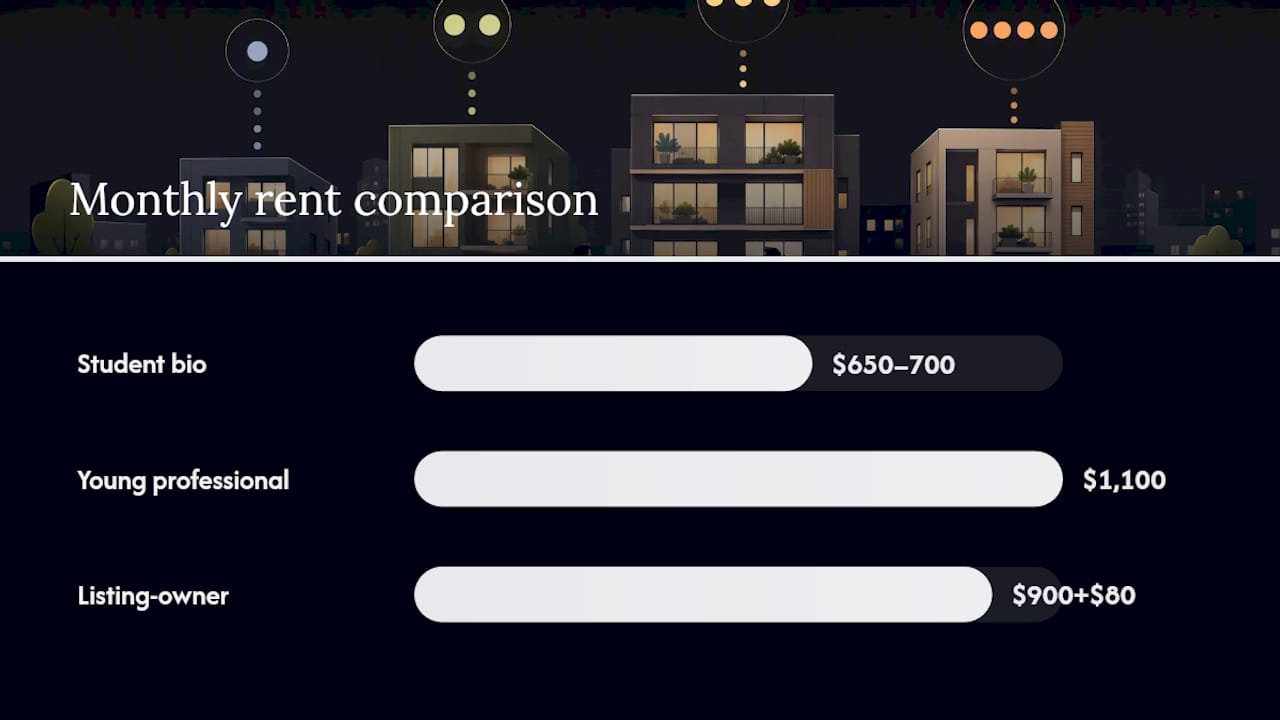
Student bio. “Hi, I’m [Name], a [year/major] student. I’m a light sleeper who’s usually in bed by midnight, and I keep a pretty consistent study schedule during the week. I’m tidy but relaxed, up for the occasional movie night, and looking to move in by [date].”
-
Young professional bio. “I’m [Name], I work a standard 9 to 5 in [field], and I’m out of the house most weekdays. I clean as I go, split chores fairly, and I’m quiet on weeknights but social on weekends. My budget is around [amount] a month, utilities included or split, your call.”
-
Listing-owner bio. “Room available for [$amount]/month, utilities split evenly ([approximate range]). Building has [amenity, like laundry or parking]. I’m [brief personal line, e.g., a grad student who works late shifts], looking for someone respectful of shared space. Move-in flexible starting [date].”
-
Deal-breaker one-liners, for when you need to be direct without sounding harsh:
- “Quiet hours after 10 PM are a must for me.”
- “I’m not able to live with cats due to allergies.”
- “Looking for a non-smoker, indoors or out.”
- “I need someone comfortable with occasional overnight guests.”
A short note on pricing phrasing: CollegeVine’s guidance on roommate bios points out that vague price language reduces trust and response rates. “Rent negotiable” reads worse than “$700 to $750 depending on room size.” Specific numbers, even approximate ones, do more work than a hedge.
If you’re timing your bio around an actual move, it helps to line up logistics like packing and move-out dates before you start messaging people. A Florida-focused dorm move-out guide walks through the kind of scheduling questions that make your stated move-in date more than a guess.
Longer Roommate Bio Examples, Annotated Line By Line
Short templates work fast, but a longer bio gives you room to sound like an actual person while still hitting every checklist item. Here’s how three different situations play out, with notes on what each sentence is doing.
Student example:
“Hi, I’m Maya, a junior studying biology. I’m usually up early for labs and asleep by 11 most nights, so quiet mornings and evenings matter to me. I keep the kitchen and bathroom clean weekly and don’t mind splitting a simple chore chart. I’m friendly and social on weekends but need my space during the week to study. Budget-wise I’m looking at $650 to $700 a month, and I’d like to move in by August 15.”
- “Up early for labs and asleep by 11” covers sleep schedule.
- “Quiet mornings and evenings matter” signals noise tolerance.
- “Clean weekly… simple chore chart” sets cleanliness and chores expectations.
- “Social on weekends but need my space” clarifies guest and social frequency without over-explaining.
- The last sentence nails budget and move-in timeline in one breath.
Young professional example:
“I’m David, I work in marketing with fairly standard hours, home most evenings by 6:30. I’m tidy, do dishes same-day, and appreciate a roommate who does the same. I’m not big on parties but I’m happy to have friends over occasionally, and I’m fine with pets as long as they’re house-trained. My budget is around $1,100, utilities not included, and I can move in as early as next month.”
- Work schedule and homecoming time cover the daily-habit prompt.
- “Tidy, do dishes same-day” is a chores expectation phrased as a contribution, not a complaint.
- The guest and pet lines handle two checklist items in one sentence each.
- Budget and utilities status are stated plainly, no hedging.
Listing-owner example:
“I have a room open in a two-bedroom apartment, $900/month plus about $80 in utilities. The building has in-unit laundry and secure parking. I’m a nurse working rotating shifts, so I’m sometimes home during the day and out overnight. Looking for someone respectful of a flexible schedule, non-smoker preferred, and open to a cat that mostly keeps to itself.”
- Rent and utilities lead the bio, exactly as housing guidance recommends.
- Amenities get named specifically instead of implied.
- “Rotating shifts… sometimes home during the day” doubles as both a personal detail and a noise/schedule warning.
- The smoking and pet lines close out deal-breakers without sounding like a list of demands.
On tone: lean warmer and more casual for student housing, where a slightly playful line (“I make excellent late-night grilled cheese”) reads as approachable rather than unprofessional. Lean more neutral and businesslike for listing-owner bios, where the reader is evaluating you as a landlord-adjacent figure as much as a roommate.
Writing Tips, Mistakes To Avoid, And Red Flags To Watch For
The best roommate bios frame preferences as contributions instead of demands. “I keep the living room picked up every Sunday” lands better than “please keep things clean,” even though both are asking for the same thing.
Common mistakes worth fixing before you post:
- Being vague about rent or move-in date, which makes people assume you’re not serious
- Skipping optional fields because they feel tedious, when they’re actually what makes your profile filterable
- Leaving out a photo, which measurably lowers response rates on most platforms
- Burying a real deal-breaker (like a strict no-pets policy) instead of stating it upfront
When you’re reading someone else’s bio, watch for the same gaps in reverse. Missing logistics, a schedule described only as “flexible,” no photo, or move-in dates that don’t match the listing date are all worth a follow-up question before you commit to anything.
Pro Tip: Before messaging someone, ask two or three direct verification questions: “Is the move-in date still accurate?” and “Are utilities included in that number?” It filters out stale listings in under a minute.
Being upfront about deal-breakers early, rather than easing into them after weeks of chatting, prevents most of the conflict that housing guides warn about.
What Campus Housing Guides Say About Optional Fields And Photos
Campus housing offices have been refining roommate-matching advice for years, mostly because they watch what actually leads to good pairings versus bad ones.
A recent, clear profile picture is associated with a higher response rate because it builds trust and helps the other person picture actually living with you. Optional fields, meanwhile, aren’t filler. Platforms use fields like study habits, social activity, and pet or smoking preferences as filters, so a completed profile surfaces to more compatible matches.
That’s the core finding from UMass Amherst’s roommate profile guidance, and it’s echoed in most campus living resources. NAU’s roommate success guide adds that a short personal bio, one with actual interests and expectations, works better than a purely logistical one. If you want a tool that’s built specifically around matching on these habits and preferences rather than just square footage and rent, that’s the exact gap a compatibility-focused shared-living marketplace is designed to fill.
How I Actually Draft A Roommate Bio
My process is simple: write the logistics line first, since it’s the easiest to get wrong through vagueness, then add one habit sentence, one chores sentence, and one personality line. shapes how I think about which details matter most to compatibility.
Case studies and user feedback indicate that specificity beats charm when it comes to roommate bios, as suggested by the templates above.
— Salem
Try Compatibility Matching Instead Of Guessing
Writing a strong bio gets you noticed, but it still leaves you sorting through mismatched replies by hand. A compatibility-focused marketplace takes a different approach: instead of just posting a bio and hoping the right person reads it, you fill out your habits, schedule, and preferences once, and the matching runs on compatibility rather than just budget and location.

The Roomitai landing page gives you profile tools built around the same fields covered in this guide, cleanliness, noise, guest policy, sleep schedule, plus filters that surface people who actually fit those answers instead of a wall of generic listings. It won’t replace a well-written bio, but it does the sorting work your inbox can’t. If you’re tired of screening replies from people who skipped half the checklist above, visit the Roomitai landing page and try the compatibility matching for yourself.
Sources
- UMass Amherst roommate profile guidance (PDF)
- NAU Roommate success guide – questionnaire and personal bio
- CollegeVine: Need help with a college roommate bio?
FAQ
What are some good words to describe yourself in a roommate bio?
Words like “tidy,” “low-key,” “night owl,” “early riser,” “social,” or “homebody” work well because they’re specific enough to signal real habits rather than generic positivity.
What are red flags in a potential roommate’s bio?
Watch for missing rent or move-in details, a schedule described only as “flexible,” no photo, and dates that don’t line up with the listing itself.
What are some other terms for “roommate”?
Common alternatives include “housemate,” “flatmate,” and “co-tenant,” though “roommate” remains the most widely searched and understood term in the US.
What are good qualities to look for in a roommate?
Clear communication about logistics, honesty about cleanliness and noise habits, and a completed profile with a photo tend to correlate with smoother living arrangements than vague or incomplete listings.
How long should a roommate bio be?
Three to four sentences is enough for most listings. Cover schedule, cleanliness, budget or rent, and one personal detail, then stop.
Find a roommate you'll actually get along with
Roomit is preparing compatibility-first matching city by city. Join your local waitlist.