 Roomit
48 Hours After a Roommate Moves Out: Protect Rent with a Deposit Buyout
If your roommate just moved out, you’re probably still on the hook for the full rent if your lease is joint and several, which most shared leases are. The next 48 hours matter most: read your lease for liability and notice clauses, notify your landlord in writing today, and start documenting everything (texts, photos, receipts). Do those three things first, and you’ll avoid the two outcomes that actually hurt you: a missed rent payment and a blank paper trail.
TL;DR:
- Most shared leases are joint and several, meaning remaining tenants are legally responsible for 100% of the rent if a roommate leaves unexpectedly.
- Notify your landlord in writing within 48 hours, photograph the unit, and document all move-related communications to protect your legal and financial interests.
- Rent payments take priority over pursuing reimbursement from a departed roommate, as missed rent can damage your credit and rental history immediately.
- Landlords typically keep the security deposit until lease end, so a private buyout is often necessary to settle a departing roommate’s share early.
- Screening for compatibility and formalizing agreements before move-in can prevent most emergency roommate changes and reduce disputes later.
Table of Contents
- What to Do When Your Roommate Moves Out (First 48 Hours)
- Who Pays the Rent, and How to Protect Your Credit
- How the Security Deposit Buyout Actually Works
- Finding a Replacement Roommate the Landlord Will Approve
- When to Get Legal Help and What to Document
- Your Roommate Move-Out Checklist and Timeline
- Handling Utilities and Shared Bills After the Move-Out
- Keeping Chores Fair When One Person Leaves
- Talking to Your Departing Roommate Without Burning the Bridge
- Updating Renter’s Insurance and Handling Leftover Belongings
- Splitting or Canceling Joint Internet and Cable Contracts
- What Better Roommate Matching Could Have Prevented
- A Faster Way to Find Your Next Compatible Roommate
- Where to Find Official Tenant-Rights Help
- Sources
- FAQ
What to Do When Your Roommate Moves Out (First 48 Hours)
The first two days set the tone for everything that follows. Move fast, but move in the right order.
- Pull out your lease and find three clauses: joint and several liability, subletting or assignment rights, and notice requirements. Joint and several liability means the landlord can legally collect the full rent from whoever’s left, not just a prorated share.
- Email your landlord today. Don’t rely on a phone call or a hallway conversation. State the departure date, ask about next steps, and request a written reply.
- Photograph the unit the day your roommate leaves, especially shared furniture, fixtures, and anything that could later become a damage dispute.
- Save every text and email related to the move, including the roommate’s own notice, in a single folder you can easily find.
- Decide within 48 hours whether you’ll cover the rent gap yourself short-term or start negotiating a deposit buyout right away.
A few things to check off before day two ends:
- Confirm whether your state or city requires a specific notice period for roommates (this varies widely and your lease usually overrides informal norms)
- Ask your landlord directly whether they’ll consider a lease amendment if you find a replacement
- Note the date and method of every landlord contact in case you need it later
The Texas Attorney General’s renters’ rights guidance is a useful model here: it tells renters, plainly, to read the lease first and contact the landlord promptly, because those two moves determine almost everything that happens next.
Who Pays the Rent, and How to Protect Your Credit
Joint and several liability is the legal term that decides who pays when a roommate disappears mid-lease. It means each tenant named on the lease is individually responsible for 100% of the rent, not just their share. Your landlord can pursue you for the full amount even if your roommate signed the same document. That’s the leverage landlords have, and it’s why paying rent on time now matters more than chasing your ex-roommate for reimbursement later.
Experian’s financial guidance recommends prioritizing rent above almost everything else, because a missed payment can trigger late fees, an eviction filing, and lasting damage to your credit and rental history. Chasing money from a departed roommate is a slower fight; a missed rent payment is an immediate one.
Short-term options if you can’t cover the gap alone:
- Ask your landlord about a temporary payment plan instead of skipping a month outright
- Consider a short personal loan or line of credit rather than falling behind on rent
- Check local rental assistance programs, which many cities and counties run for exactly this situation
- Track every payment you make beyond your share, with dates and amounts, so you can seek reimbursement later
Pro Tip: Keep a simple spreadsheet logging who paid what and when, starting the day your roommate leaves. It becomes your evidence if this ever reaches small claims court.
How the Security Deposit Buyout Actually Works
Landlords almost never split a security deposit mid-lease. The deposit stays with the landlord until the tenancy officially ends, and refunds depend on final move-out condition, not on when anyone roommate leaves. That timing gap is exactly why a private buyout between roommates has become the standard workaround, according to Splitty’s guidance on roommate move-outs.
A buyout means you (or an incoming roommate) pay the departing roommate their estimated deposit share now, in exchange for them giving up any claim to the refund later. Here’s a workable process:
- Walk through the unit together and photograph its current condition.
- Agree on any deductions for damage or missing items before settling a number.
- Calculate the departing roommate’s share based on their original contribution.
- Write a short, signed note stating the amount paid and that they release their claim to the future refund.
- Decide now who will endorse the landlord’s refund check when the lease finally ends.
Pro Tip: For shared furniture, get a quick private valuation (even a rough one you both agree on) instead of letting it turn into a drawn-out negotiation over a couch.
Finding a Replacement Roommate the Landlord Will Approve
Recruiting the right person fast beats recruiting anyone fast. Ask friends, coworkers, or coworkers’ friends first. If you go wider, screen for income stability, a clean rental history, and references you can actually call. Skipping this step to fill the room quickly is how a second bad move-out happens six months later.
Before you bring a candidate to your landlord, get organized:
- A photo ID and proof of income or employment
- A reference from a previous landlord if available
- A completed rental application, if your landlord requires one
Presenting a landlord-ready candidate speeds up approval and shows you’re handling the transition responsibly, which matters if you’ll need their cooperation again.
There are three different paths a landlord might offer, and they’re not interchangeable:
- Sublease: the new person rents from you, not the landlord, and you stay fully liable.
- Lease assignment: the new person takes over the original tenant’s full legal position on the lease.
- Lease amendment: the landlord rewrites the lease to formally add or remove names.
Most landlords prefer an amendment because it keeps their records clean and their liability clear, but almost all three routes require their written approval first.
When to Get Legal Help and What to Document
Most roommate move-outs don’t need a lawyer, but some do. If your roommate owes you money and won’t pay, or your landlord disputes your version of events, Legal Services Corporation’s directory connects renters with free or low-cost legal aid based on income and issue type. Local tenant clinics can also review your lease for free before you take any formal action.
If informal collection fails, small claims court is a realistic option for recovering unpaid rent or deposit money, though Nolo’s guide to roommate move-outs notes that actually collecting a judgment can take longer than winning the case itself.
Keep these on hand no matter which path you take:
- Your signed lease and any amendments
- Every text, email, and written notice tied to the move-out
- Photos of the unit’s condition on the departure date
- Receipts for rent payments and buyout transactions
- A signed release of liability, if your landlord agrees to one
Your Roommate Move-Out Checklist and Timeline
Break the process into three windows so it doesn’t feel like one giant emergency.
0 to 48 hours:
- Read the lease clauses on liability and notice.
- Email the landlord with the departure date and a request for next steps.
- Photograph the unit and shared items.
3 to 14 days:
- Start vetting replacement candidates.
- Negotiate and document a deposit buyout.
- Confirm your landlord’s preferred path (sublease, assignment, or amendment).
30 days:
- Finalize any lease amendment paperwork.
- Update utility accounts and shared subscriptions.
- Close out your documentation folder in case a dispute surfaces later.
If your roommate won’t cooperate or rent still can’t be covered, contact your landlord again in writing and ask about a payment plan before a due date passes, not after.
Handling Utilities and Shared Bills After the Move-Out
Utilities usually sit in one person’s name, and that person stays legally responsible even after a roommate leaves. If it was your roommate’s name on the electric or internet account, call the provider immediately to transfer billing into your name or a remaining roommate’s name, before a payment gets missed and hits someone’s credit.
Go account by account: electricity, gas, water, internet, and any streaming or subscription splits you’d informally worked out. Cancel anything genuinely shared that a new roommate hasn’t agreed to take on yet, rather than assuming the arrangement continues automatically. If you’re fronting a departed roommate’s share temporarily, note the amount and date, the same way you’re tracking rent overpayments.

Talk to remaining roommates about a simple system going forward: one shared account for bill splitting, or a rotating single-payer model with monthly reimbursement. Whatever you choose, put it in writing, even informally, so the next transition doesn’t reopen the same argument. A five-minute conversation now prevents a much longer one after the next move-out.
Keeping Chores Fair When One Person Leaves
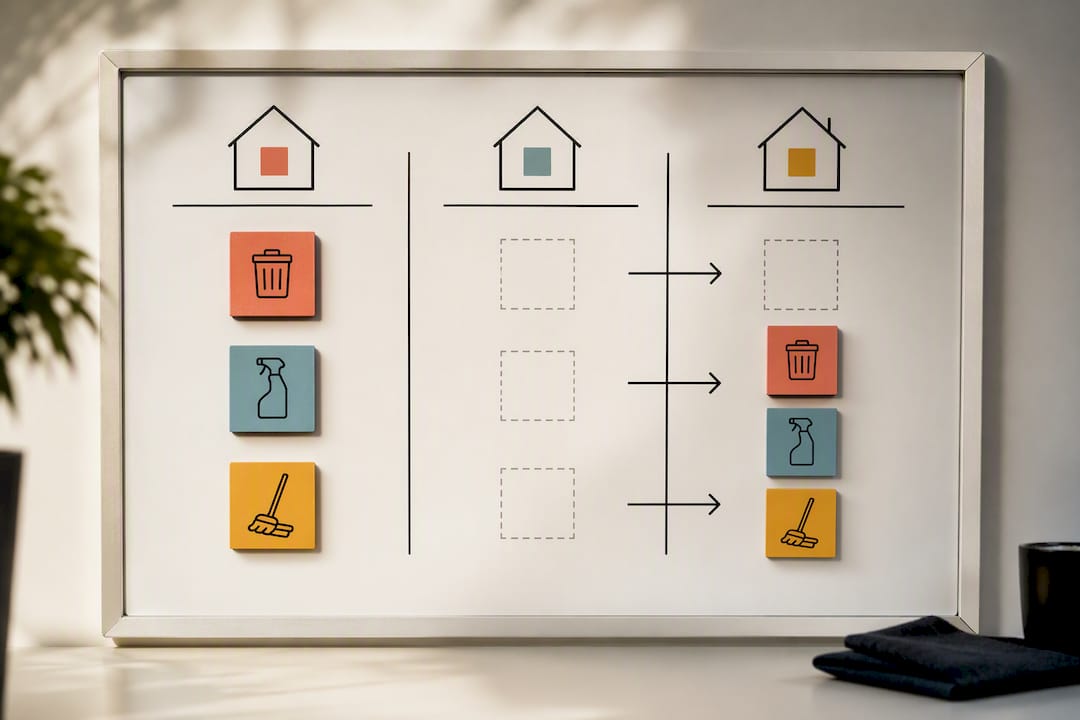
A departure doesn’t just leave a financial gap. It leaves a chore gap too, and that’s often where new roommate tension actually starts. If your former roommate handled trash night or the kitchen deep clean, that task doesn’t disappear. It lands on whoever’s left, usually without a conversation about it.
Sit down with remaining roommates within the first week and redraw the chore list from scratch rather than trying to patch the old one. Assign tasks based on who’s actually still there and what their schedule allows, not on the old arrangement that no longer reflects the household. A simple shared checklist, even a basic whiteboard or shared notes app, keeps this visible instead of assumed.
If you’re bringing in a replacement roommate, treat chores as part of the vetting conversation, not an afterthought after they’ve signed on. Ask directly about cleaning habits, noise tolerance, and guest expectations before move-in day, not after the first dish pile-up. Households that talk about this upfront tend to avoid the resentment that quietly builds when one person feels like they’re covering for someone else’s absence.
Talking to Your Departing Roommate Without Burning the Bridge
How you communicate during this transition affects everything from the buyout negotiation to whether they’ll actually respond when you need a signature later. Start with a direct, low-drama conversation about the departure date, financial obligations, and what needs to happen before they leave. Avoid letting the conversation happen entirely over text if the relationship allows for a real conversation.
Put the key agreements in writing afterward, even if the actual conversation was casual. A short follow-up message summarizing what you agreed on (move-out date, deposit buyout amount, who’s handling the utility transfer) protects both of you and gives you something to point back to if memories differ later.
If the relationship has soured, keep every exchange calm, factual, and in writing. Dealing with an ex-roommate who’s avoiding messages or disputing what was agreed is far easier when you have a paper trail rather than a memory of a conversation. Set a specific deadline for their response on anything outstanding, whether it’s a signature, a payment, or picking up remaining belongings, and follow up once, in writing, before escalating further.
Updating Renter’s Insurance and Handling Leftover Belongings
Renter’s insurance policies often list roommates by name or assume a certain household composition, so a departure is a legitimate reason to call your provider and review your coverage. If your former roommate’s belongings contributed to the policy’s total coverage estimate, your remaining coverage might now be mismatched to what’s actually in the unit.
Ask your provider two direct questions: does removing a roommate change your premium, and does your policy still cover the full value of what’s left in the space. This is also the moment to photograph your own belongings for your own records, separate from the move-out documentation you’re keeping for the landlord.
For anything your roommate left behind, whether furniture, boxes, or a bike in the hallway, set a firm pickup deadline in writing and confirm they’ve seen it. Storage becomes the practical fallback when a pickup date keeps slipping. A guide like Island Park Storage’s moving resources covers how to set up a short-term storage plan and draft the kind of written move-out agreement that keeps leftover belongings from turning into a longer dispute.
Splitting or Canceling Joint Internet and Cable Contracts
Internet, cable, and streaming bundles are usually the most overlooked part of a roommate move-out, mostly because they’re rarely in a single dramatic dispute the way rent or the deposit can be. Check whose name is actually on the account first. If it’s the departing roommate’s, you’re facing a full transfer or cancellation, not a simple adjustment.
Most internet and cable providers allow an account transfer to a remaining resident with a quick verification call, though some require a new service agreement entirely, which can trigger new promotional pricing or a different contract term. Ask directly whether transferring keeps the existing rate or resets it, since providers don’t always volunteer that detail.
If a replacement roommate is moving in soon, decide together whether keeping the existing account and splitting cost makes more sense than starting over, especially if there’s an early termination fee attached to canceling mid-contract. Whatever you decide, get it in writing among the remaining roommates so nobody’s stuck fronting a bill nobody agreed to keep.
What Better Roommate Matching Could Have Prevented
Most roommate move-outs I look at didn’t have to be emergencies. They became emergencies because two people who never should have signed a lease together did anyway, usually because the search happened under time pressure and the only filters were price and location.
A written roommate agreement drafted before move-in, covering guest policies, cleaning frequency, notice expectations, and financial responsibilities, would have resolved half the disputes in this guide before they started. Compatibility matching that actually weighs schedules, noise tolerance, and cleanliness (not just budget and square footage) catches the mismatches that lease paperwork never asks about. For your next tenancy, screen for habits the way you’d screen for income, and put the agreement in writing before anyone signs a lease.
— Salem
A Faster Way to Find Your Next Compatible Roommate
There are practical alternatives to scrolling generic listings hoping a stranger’s schedule and cleanliness habits happen to match yours. Some platforms rank compatibility across numerous lifestyle and household factors, covering things like noise tolerance, guest policies, and daily routines, so you’re not gambling on the next person the way you might have gambled on the last one.

That matters most right now, when you need a replacement roommate fast but can’t afford another bad fit six months from now. Messaging stays private by default, and verification is opt-in, so you’re not handing your contact information to every applicant before you’ve actually decided they’re worth talking to. If you’re rebuilding your household after an unexpected move-out, start a search on the Roomit landing page and filter for the habits and schedule that actually matter to your living situation, not just your budget.
Where to Find Official Tenant-Rights Help
- Texas Attorney General renters’ rights
- HUD Fair Housing Act overview
- Usa
- Legal Services Corporation legal aid finder
Laws vary significantly by state and city, so confirm specifics with your local resources.
This article is general information, not a substitute for advice from a qualified financial advisor. Consult a qualified financial professional about your own circumstances before acting on anything here.
Sources
- Renters rights — Texas Attorney General
- Fair Housing Act overview — HUD
- 4 Financial Steps to Take When Your Roommate Moves Out — Experian
- What to do when a roommate moves out — Nolo
FAQ
How Do I Handle a Roommate Moving Out?
Read your lease first to confirm whether you’re jointly and severally liable, then notify your landlord in writing and start documenting everything, including photos and communications. From there, decide quickly whether you’ll cover the rent gap temporarily or start vetting a replacement roommate, since the Nolo guide to roommate move-outs notes that landlords can pursue remaining tenants for the full rent regardless of who actually leaves.
How Long Does a Roommate Legally Have to Give Notice?
Notice requirements come from your lease first, not from general custom, so check the actual document before assuming a standard window applies. If the lease is silent, informal norms of 30 days are common, but they’re not legally binding unless your lease or local ordinance says so.
What Are the Early Signs of Roommate Trouble Before Someone Leaves?
Missed rent contributions, avoiding shared conversations, and sudden changes in schedule or guest patterns often show up before an abrupt move-out. A written roommate agreement made early, covering money, chores, and communication expectations, tends to surface these tensions before they turn into a sudden departure.
How Much Notice Should a Roommate Give Before Moving Out?
Most informal arrangements expect 30 days’ written notice, though your actual lease terms control this if they specify something different. Even without a legal requirement, giving and getting written notice protects everyone if a dispute over rent or the deposit comes up later.
When Does the Security Deposit Get Returned After a Roommate Leaves?
The security deposit typically isn’t returned until the entire lease ends, not when one roommate individually moves out, since Splitty’s guidance on roommate deposits confirms landlords hold the full deposit through the tenancy’s end. That’s why a private buyout between roommates, rather than waiting on the landlord, has become the standard way to settle a departing roommate’s share right away.
Find a roommate you'll actually get along with
Roomit is preparing compatibility-first matching city by city. Join your local waitlist.