 Roomit
Pay the Landlord First: Renters' Checklist for Nonpaying Roommates
Pay the landlord in full first, even if that means covering your roommate’s share out of pocket, because protecting your tenancy always comes before recovering the debt. Document every missed payment and message right away. Send a written demand with a firm deadline, and if that fails, escalate to mediation or small claims court. Never change the locks, remove belongings, or shut off utilities. Those moves are illegal in most places and will wreck your case.
TL;DR:
- Paying the landlord in full and keeping receipts protects your credit and legal standing, even if it means covering your roommate’s share out of pocket.
- A lease with joint and several liability allows the landlord to pursue you for the full rent regardless of your roommate’s unpaid portion.
- A well-drafted demand letter with exact amounts, a clear deadline, and proof of delivery is essential for legal actions or court cases.
- Community mediation can be an effective alternative to court, especially if the roommate is willing to negotiate or move out voluntarily.
- Document all payments, communications, and evidence thoroughly to strengthen your case if you need to sue your roommate or pursue eviction.
Table of Contents
- What To Do When Your Roommate Doesn’t Pay Rent
- How Does Your Lease Determine Who’s Liable?
- How Do You Document the Debt and Send a Demand Letter?
- Can You Resolve This Without Going to Court?
- When Should You Sue Your Roommate or Consider Eviction?
- Protecting Your Credit and Deposit While You Pursue Repayment
- How Do You Talk to a Roommate Who Isn’t Paying?
- When Should You Loop In the Landlord?
- What If Your Roommate Disappears or Won’t Respond?
- What Are Your Options If You Can’t Remove Your Roommate Right Away?
- Preventing the Next Roommate Money Fight
- A Better Way To Screen Roommates Before Money Becomes the Problem
- Sources
- FAQ
What To Do When Your Roommate Doesn’t Pay Rent
The first 24 to 72 hours matter more than anything that comes after. Your priority is keeping the tenancy intact while building a paper trail you can actually use.
Start by deciding whether you can cover the missing share. If you can, pay the landlord through the accepted method (check, portal, money order) and keep every receipt. Paying on time protects your credit and keeps the landlord from treating you as the problem, which matters enormously if this ever lands in court. If you can’t cover it, tell the landlord the truth before the due date passes and ask about a short grace period or partial payment plan.
While that’s happening, start collecting evidence:
- The lease and any separate roommate or room-sharing agreement
- Bank records, canceled checks, or app transfers (Venmo, Zelle, PayPal) showing past rent splits
- Text messages, emails, or chat logs where your roommate acknowledged owing money
- A dated log of missed payments and any conversations about them
Avoid confronting your roommate aggressively or taking matters into your own hands. If they threaten you or become hostile, write down exactly what was said and when, and consider your physical safety before pressing the issue further.
Pro Tip: Screenshot text threads immediately. Roommates who plan to disappear often delete conversations once they realize you’re keeping records.
How Does Your Lease Determine Who’s Liable?
Your lease type decides who the landlord can chase and who you can sue, so read it before you plan your next move.
Most shared units run on a joint lease, where every signer carries joint and several liability. That means the landlord can legally demand the full rent from you alone, regardless of what your roommate owes you personally. It’s an unfair arrangement in practice, but it’s how most standard leases are written.
Other setups shift the picture:
- Individual or per-bedroom leases: each tenant has a separate contract with the landlord, so nonpayment by one roommate doesn’t put your name on the hook.
- Occupants or subtenants: someone who isn’t on the lease at all (a subletter or informal roommate) usually has no direct relationship with the landlord, which means only you can pursue them, not the property owner.
- Guarantors: if a parent or third party co-signed, they may share liability too.
Check your lease for the phrases “joint and several,” “occupant,” or “guarantor” before deciding whether to sue your roommate directly or coordinate with the landlord. The wording changes everything about your leverage.
How Do You Document the Debt and Send a Demand Letter?
Courts want a clean trail from unpaid rent to your out-of-pocket cost, and a demand letter is the piece that ties it together.
Build your evidence folder first:
- The lease or roommate agreement showing the agreed split
- Bank statements, canceled checks, or app receipts proving what you actually paid
- Texts or emails where your roommate confirmed the amount they owed
- A dated summary of every missed payment
Then draft the demand letter itself. A solid one includes the exact amount owed, the months it covers, a note that you’ve already asked informally, and a firm deadline, usually 14 to 30 days out. State plainly that you intend to file in small claims court if the balance isn’t paid.
Send it by certified mail with a return receipt, or by email with delivery and read confirmation, and save proof of both. This letter does more than ask for money: it shows a judge you tried to resolve things before suing, which small claims courts generally expect to see. If the deadline passes with no payment, no response, or a flat refusal to negotiate, that’s your signal to escalate.
Can You Resolve This Without Going to Court?
Court should be your last stop, not your first move, and most roommate disputes never need to get there.
A written repayment plan is often the fastest fix if your roommate is willing to negotiate. Spell out the payment schedule, exact amounts, method of payment, and what happens if they miss a date again. Get both signatures on it.
If direct conversation has stalled, community mediation programs offer a low-cost middle ground. Mediation preserves the relationship where possible and can produce a written agreement that holds more weight than a verbal promise. Many cities and counties run free or sliding-scale mediation services through local courts or nonprofits.
You can also loop in the landlord, but keep expectations realistic:
- Tell them the situation factually, without demanding they act as your collector
- Understand they won’t remove a roommate from the lease just because you ask
- Ask whether a lease modification is possible if your roommate agrees to move out
If your roommate agrees to leave voluntarily, put the move-out date, inspection terms, and key return in writing before they go.
When Should You Sue Your Roommate or Consider Eviction?
Small claims court works when your roommate owes a specific, provable amount and simple negotiation hasn’t worked. You can generally sue a roommate directly for reimbursement if you paid more than your share, and a documented demand letter makes that case stronger. Filing limits vary by state, so check your local small claims court’s threshold before filing.
Judges typically want to see:
- The lease or roommate agreement
- Bank records proving what you paid
- The demand letter and proof it was delivered
- Any written acknowledgment of the debt from your roommate
Pro Tip: Bring three copies of everything to your hearing: one for the judge, one for your roommate, and one for yourself.
Eviction works differently. Landlords, not roommates, file evictions, and notice periods for nonpayment vary widely by jurisdiction, from a few days to several weeks depending on local law. If your roommate isn’t on the lease, you may need to serve your own notice to vacate under your state’s occupant laws, which is a separate process from landlord-initiated eviction.
Winning a judgment and collecting the money are two different battles. Small claims judgments don’t come with an automatic collection mechanism, so weigh whether your roommate has wages or assets worth pursuing before you invest time in a lawsuit you can’t ultimately collect on.
Protecting Your Credit and Deposit While You Pursue Repayment
Covering the full rent to avoid eviction is often the smarter short-term move, even though it stings. Staying current protects your credit and your housing while you work on getting reimbursed separately.
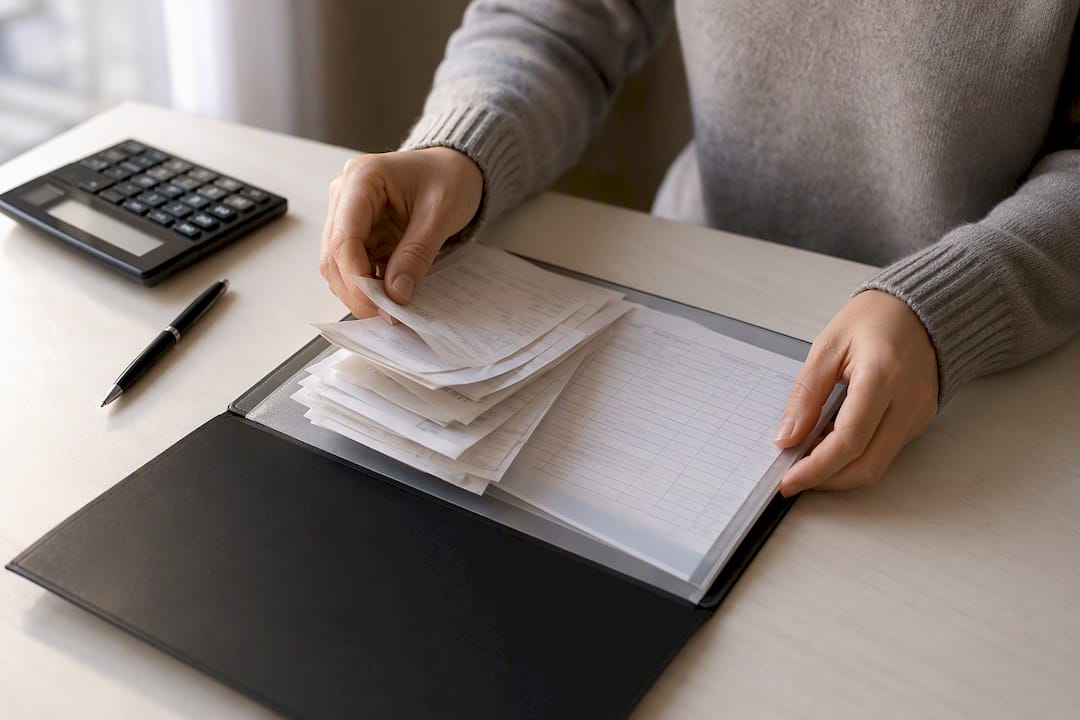
Keep an itemized ledger of every payment you’ve made beyond your own share, along with copies of every receipt. This becomes your evidence if the case ends up in small claims court or if the landlord withholds part of the security deposit for unpaid rent, since you can pursue your former roommate for their portion of that loss too.
If the amount owed is significant or your roommate has vanished, a local tenant aid organization or legal aid clinic can review your lease and outline your specific options at no cost. A consumer-credit counselor can also help if the missed payments have already dinged your credit report.
How Do You Talk to a Roommate Who Isn’t Paying?
Most nonpayment situations start as a money problem, not a character problem, so lead the conversation that way. Ask directly and calmly: “What’s going on with rent this month, and when can I expect it?” Avoid accusations in the first conversation. Job loss, a bank error, or a forgotten transfer are common, ordinary causes, and starting with blame usually shuts down cooperation before you’ve even heard the reason.
Put any agreement in writing immediately, even a simple text confirming “you’ll pay $400 by the 15th” creates a record. Verbal promises evaporate, and having a paper trail protects both of you if the situation repeats.
If the first conversation doesn’t produce a plan, set a follow-up date rather than letting it drift. “Let’s check in on Friday if the payment hasn’t come through” keeps the pressure steady without turning combative. Keep your tone factual: state the amount, the date it was due, and what you need to happen next.
Watch for patterns. A one-time miss with a clear explanation is different from a second or third missed payment with vague excuses. The moment communication turns evasive, short, or defensive, that’s your cue to shift from casual conversation to a written demand. Staying calm through this stage isn’t about being passive. It’s about building the kind of clean, reasonable record that helps you later if a landlord, mediator, or judge needs to see how you handled things.
When Should You Loop In the Landlord?
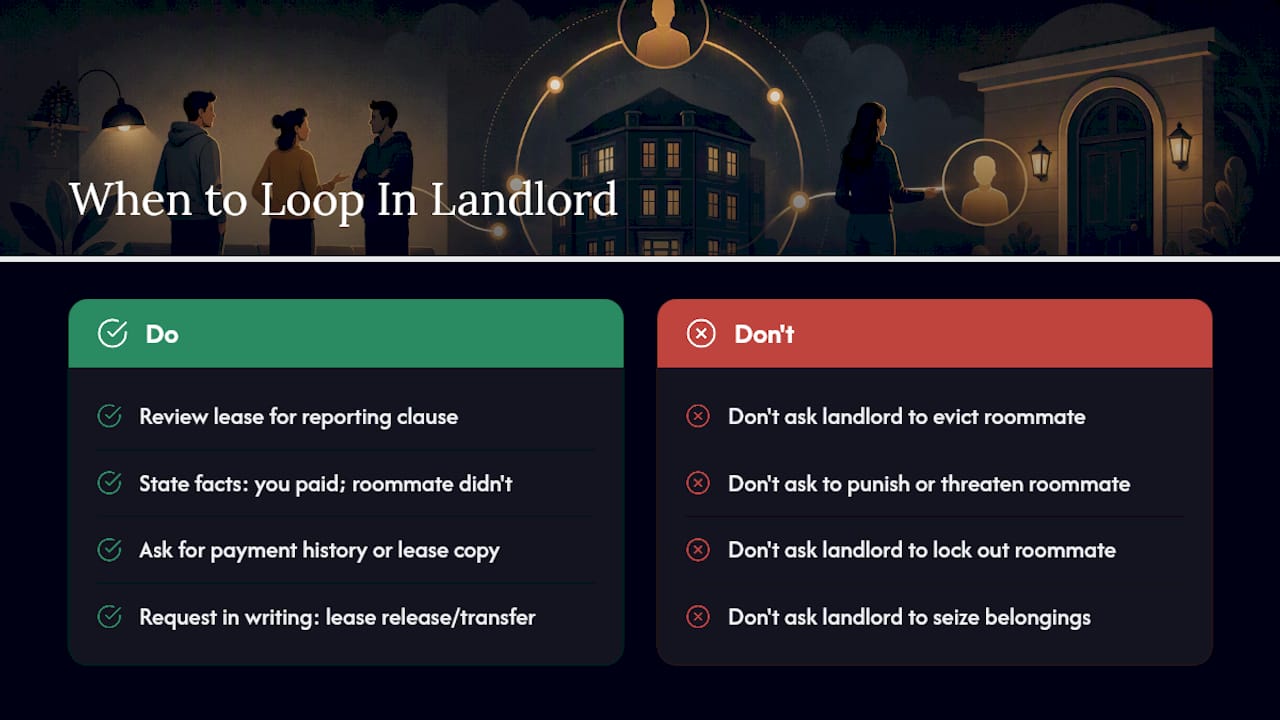
Your landlord can be a useful ally, but only if you approach them the right way. Start by reviewing your lease for any clause about reporting payment issues, since some agreements require notifying the landlord of a dispute between tenants.
When you do reach out, keep it factual. Explain that rent has been paid in full (assuming you covered it) and that one roommate has not reimbursed their share. Avoid asking the landlord to punish, threaten, or remove your roommate directly. On a joint lease, the landlord’s obligation is to the full group, not to mediating your internal money dispute, and pushing them to take sides can backfire.
What the landlord can reasonably do: confirm payment history, provide a copy of the signed lease if you’ve lost yours, and tell you whether a lease amendment is possible if your roommate wants to move out. What they typically won’t do: evict one roommate while leaving others in place, unless your specific lease structure and local law allow it.
Never ask the landlord to help you lock your roommate out or hold their belongings as leverage. That exposes both of you to liability, and it can shift the landlord’s view of the situation from “tenant dispute” to “problem tenant household,” which hurts everyone on the lease.
If the relationship has broken down entirely, ask your landlord in writing whether they’d consider releasing your roommate from the lease with your consent, or transferring the unit to your name alone. Some landlords will negotiate this if you have a replacement roommate lined up. Keep every email exchange with the landlord as part of your evidence file. It shows good faith and gives you a timestamped record of what was discussed and when.
What If Your Roommate Disappears or Won’t Respond?
A roommate who goes silent is frustrating, but it doesn’t stop your options. Keep paying full rent to the landlord if you’re able to, since your obligation on a joint lease doesn’t pause just because your roommate stopped answering texts.
Send your demand letter anyway, using the last known address and any email or phone number you have. Certified mail that comes back unclaimed is still proof you attempted contact, and that record matters if you eventually file in small claims court. Check whether your state allows service by alternative means (email, social media, or posting) if you can’t locate them for a lawsuit.
Reach out to mutual contacts only to confirm safety, not to pressure them into paying. If you genuinely believe something is wrong (a medical emergency, an accident) that’s a different situation than someone deliberately ghosting a debt.
Once it’s clear the disappearance is deliberate, treat it the same way you would treat a flat refusal to pay: finish your evidence folder, let the demand deadline pass, and file in small claims court for the amount owed. A default judgment, where the court rules in your favor because the other party never shows up, is common in these cases and still gives you a legal basis to pursue wage garnishment or bank levies later, depending on your state’s collection rules.
If your roommate was on the lease and has effectively abandoned the unit, tell your landlord. Some states have specific abandonment procedures that let the landlord reclaim that portion of the lease, which can open the door to finding a replacement roommate sooner.
What Are Your Options If You Can’t Remove Your Roommate Right Away?
Sometimes eviction isn’t realistic in the short term, whether because your roommate isn’t on the lease in a way that makes removal simple, or because the legal process will take weeks you don’t have. You still have moves.
Ask your landlord about a temporary sublease or a substitute roommate arrangement while you sort out the dispute. Some landlords will allow a short-term guest to cover costs if you’re upfront about the situation.
Consider whether a temporary stay with family or friends makes sense if the living situation has become unsafe or unbearable, while you continue paying your share and pursuing your roommate for reimbursement separately. You don’t have to physically remain in a hostile household to keep your legal claim alive.
If you’re actively searching for a replacement roommate to fill the gap once the current one leaves or is removed, start that search early rather than waiting for the legal process to finish. A compatibility-focused platform can help you avoid repeating the same mistake with the next person you bring in, since financial reliability often tracks with broader lifestyle compatibility. Whatever path you choose, keep documenting. Every payment, every message, every dollar you cover stays relevant even after you’ve moved on to a new living situation.
Preventing the Next Roommate Money Fight
Most roommate payment disputes trace back to a mismatch nobody screened for. Two people who split rent without a real conversation about spending habits, job stability, or how they handle financial stress are rolling the dice every month.
A written roommate agreement with a clear payment schedule, agreed method, and consequences for a missed payment stops a lot of this before it starts. So does asking direct questions upfront: How do you plan to pay rent each month? What happens if you’re short? Compatibility isn’t just about noise levels and cleanliness. It extends to how someone handles money under pressure, which is exactly the kind of signal a compatibility-based roommate matching platform is built to surface before you sign a lease together.
— Salem
A Better Way To Screen Roommates Before Money Becomes the Problem
Everything in this article is about damage control after a roommate stops paying. This kind of service exists for the step before that ever happens.

Instead of matching on rent budget and move-in date alone, Such platforms look at the habits that actually predict whether a shared household holds together: cleanliness standards, noise tolerance, guest policies, and daily schedules. Financial reliability rarely shows up in isolation. It tends to travel with the same patterns of follow-through that show up in how someone keeps a shared space or communicates about plans, and Compatibility matching is built to surface that before you’ve signed anything together.
This service isn’t a legal service and it won’t help you collect a debt from a roommate who already stopped paying. What it can do is help you find your next housemate with far more information than a listing photo and a rent number ever gives you. If you’re rebuilding a household after this experience, or starting your very first shared lease, browse compatible rooms and roommates on Roomitai before you commit to anyone.
This article is general information, not a substitute for advice from a qualified lawyer. Consult a qualified legal professional about your own circumstances before acting on anything here.
Sources
- Joint Lease Roommate Not Paying Rent: What to Do - LegalClarity
- Sue Your Roommate for Unpaid Rent - Nolo
- What to do when your roommate stops paying rent - RentCafe
- My roommate stopped paying rent and won’t move out - Brick Underground
FAQ
What do I do if my roommate doesn’t pay rent?
Pay the landlord your full rent to protect your tenancy, then document every missed payment and send a written demand letter with a clear deadline before pursuing small claims court.
How do I deal with a roommate who refuses to pay?
Have a direct, non-accusatory conversation first, put any agreement in writing, and escalate to a formal demand letter or mediation if they continue to refuse.
What should I do if my roommate isn’t paying rent and won’t communicate?
Keep paying rent if possible, send your demand letter to their last known contact information anyway, and prepare to file in small claims court, where a default judgment is common if they never respond.
How long does it take to evict a roommate for not paying rent?
Landlords, not roommates, typically file evictions, and notice periods for nonpayment vary by jurisdiction, ranging from a few days to several weeks depending on local law.
Can I sue my roommate directly instead of waiting for the landlord to act?
Yes, you can generally sue a roommate in small claims court to recover money you paid on their behalf, especially if you have a demand letter and payment records showing the shared responsibility.
Find a roommate you'll actually get along with
Roomit is preparing compatibility-first matching city by city. Join your local waitlist.